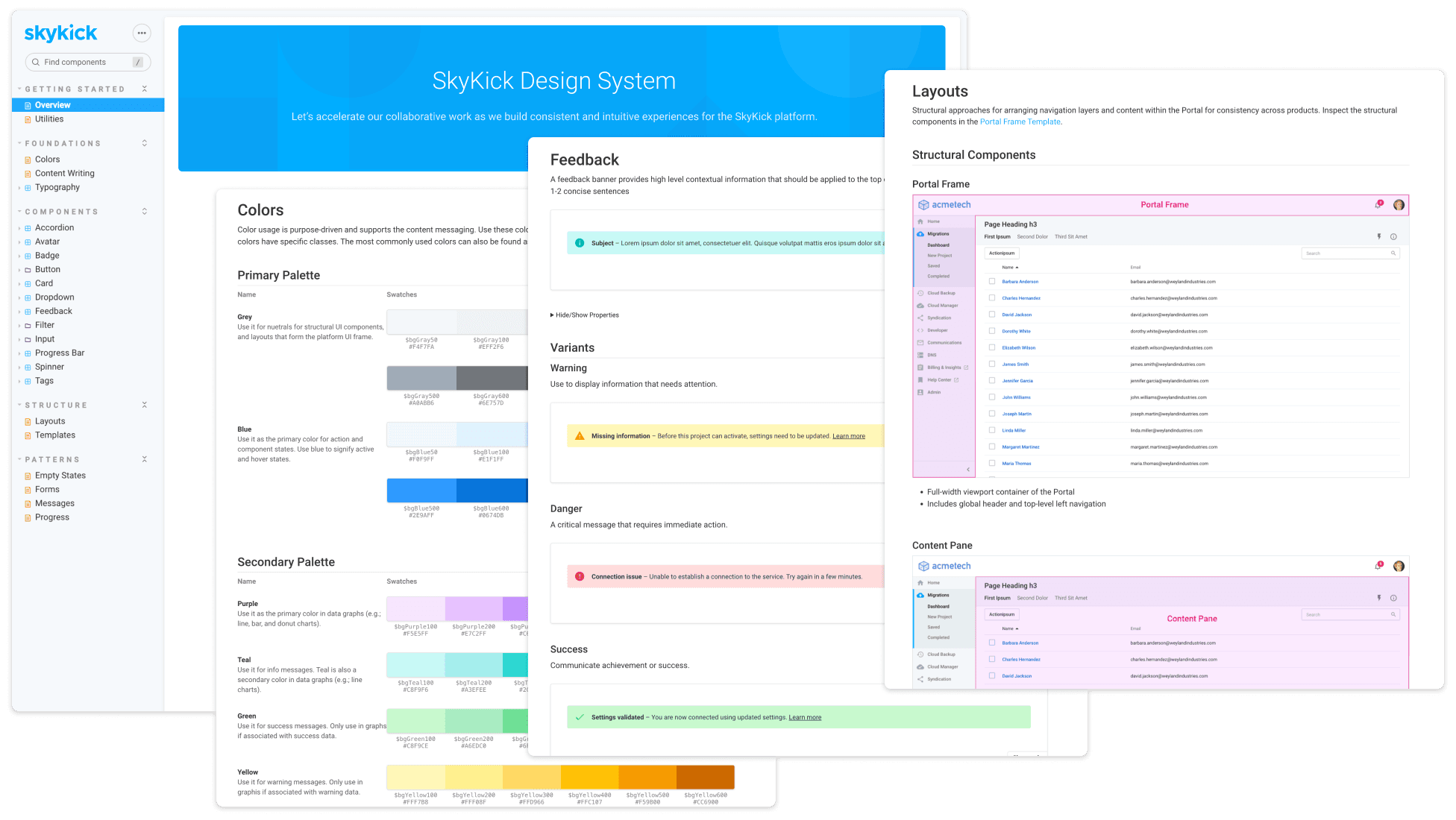
Problem
Front-end silos, and no case for fixing them
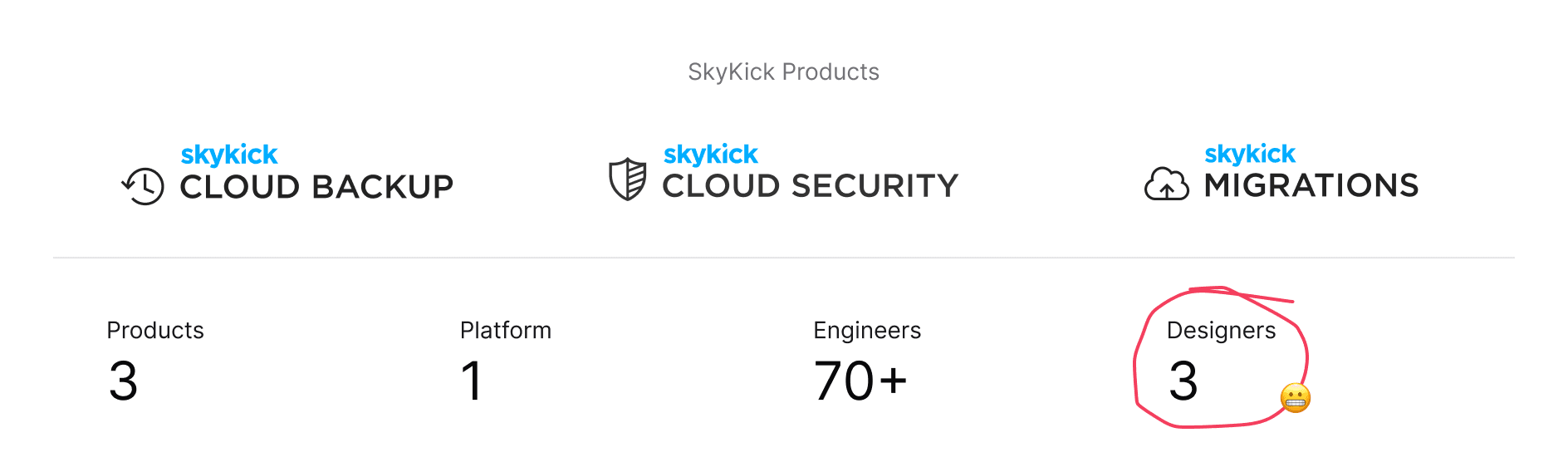
Approach
Start small, deliver value
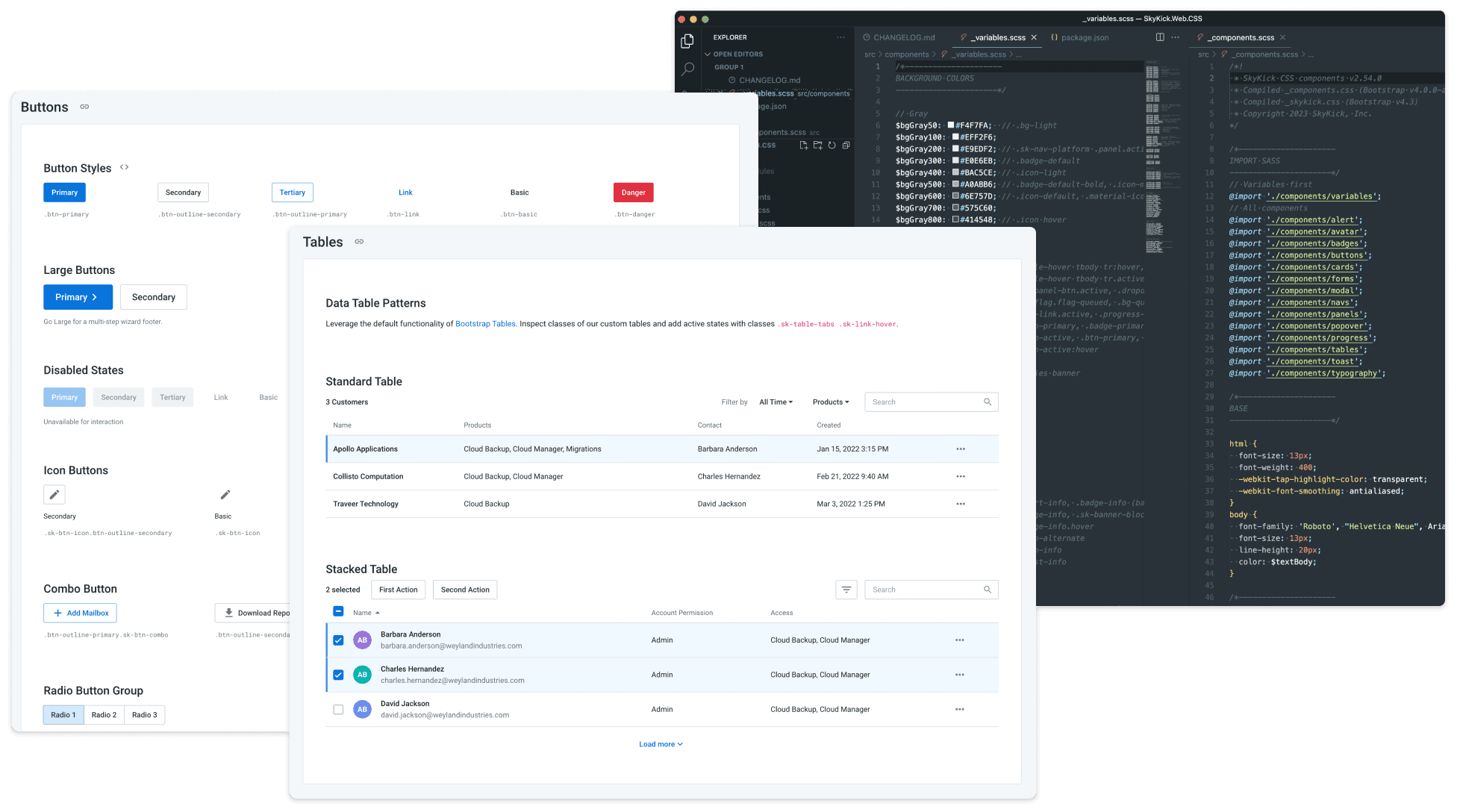
Foundations of the System
Make it self-serve
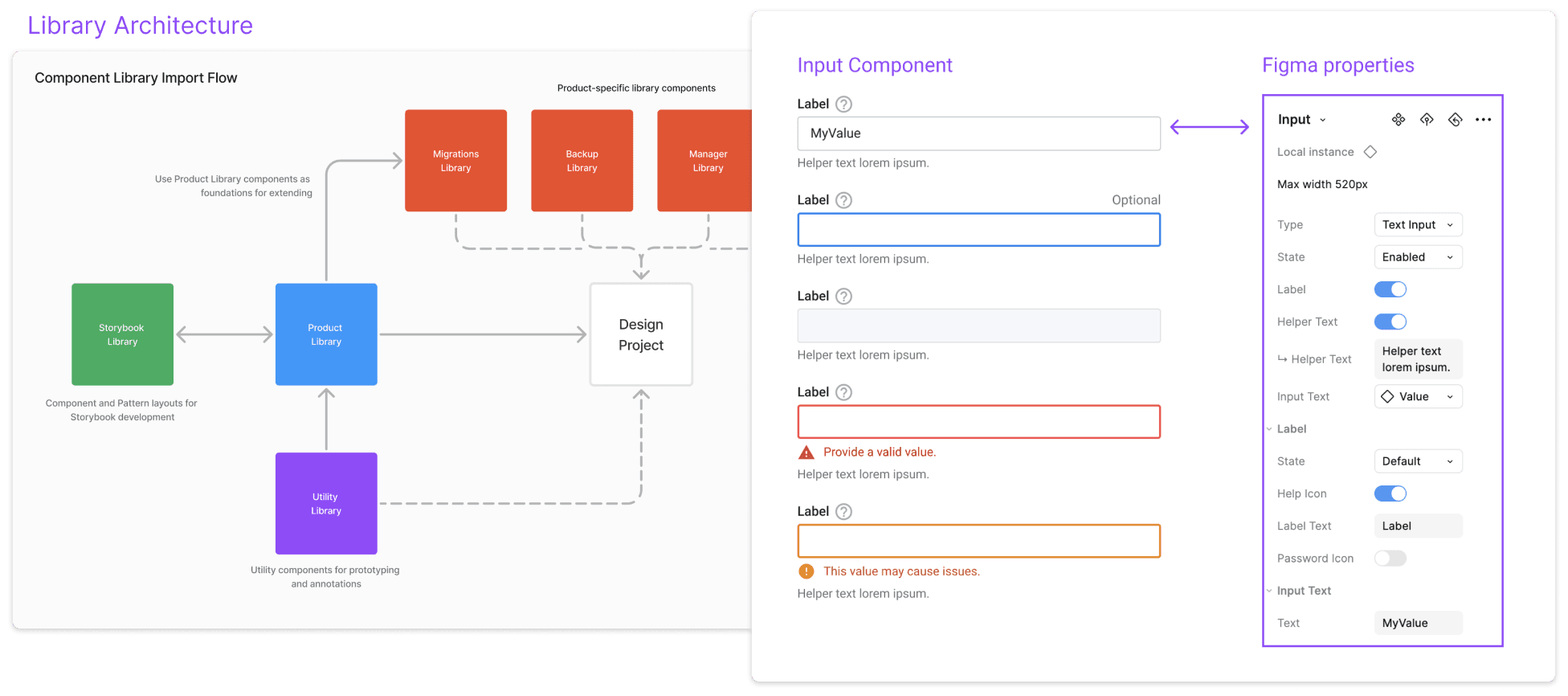
With engineering time committed, I built both halves: a component library for designers, and Storybook for engineers.
Figma Component Library
I owned the core library end to end, building components, reviewing updates with the design team, and iterating on feedback. All three products shared it, with per-product libraries layered on top so teams could extend without breaking the core.
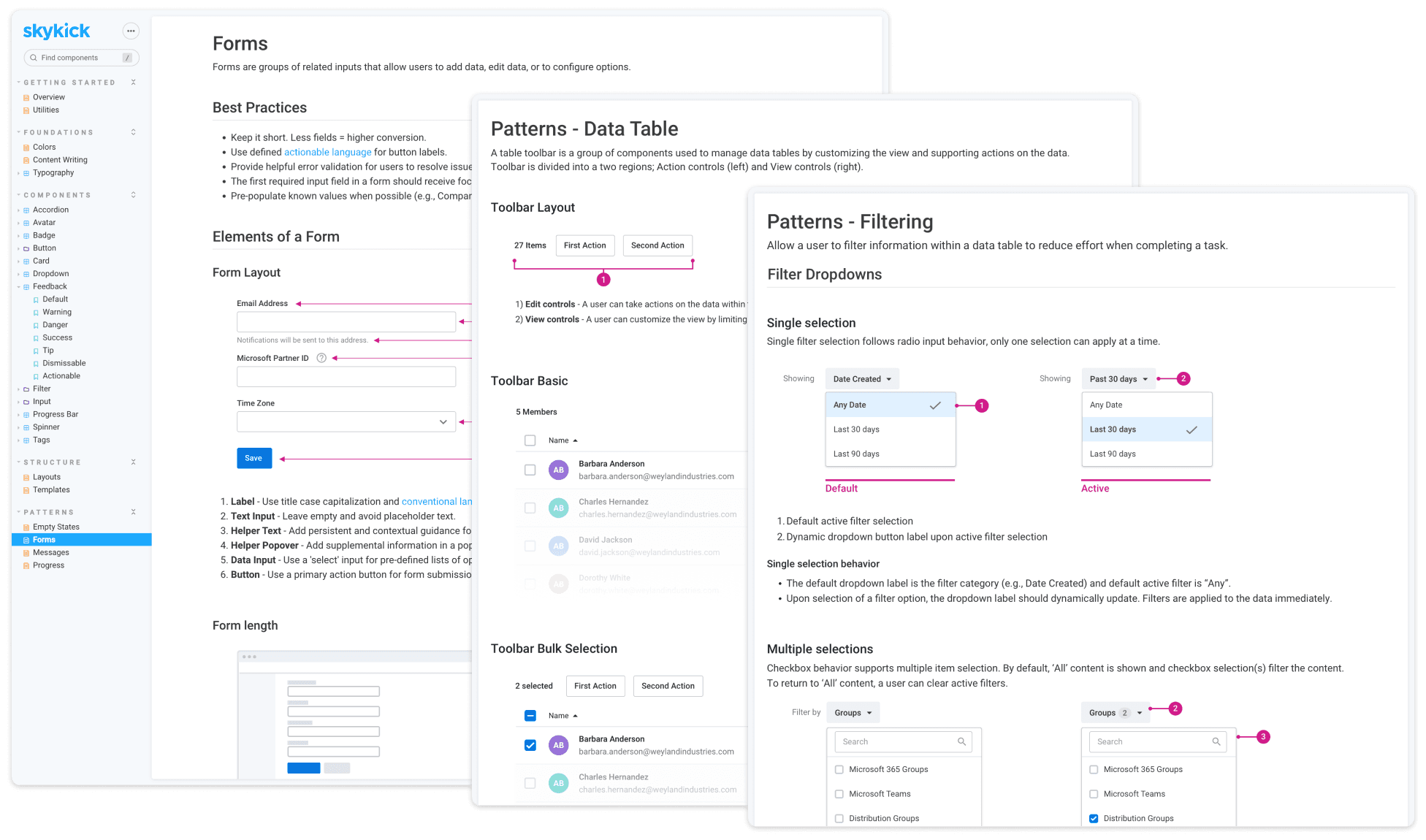
Storybook & UX Patterns
I directed the Storybook implementation with engineering and documented the behavioral patterns that lived alongside the components: form validation, filter behavior, drawer interactions, navigation hierarchy. Engineers could find and build them without going through design. Each pattern carried the rationale behind it.
Outcomes
A common language
Our system was far from perfect, but the concepts and assets had permeated the company. The real test came with a full redesign of Cloud Backup, the largest revenue product, as engineering ramped up for an aggressive build. The components, patterns, and UI templates let teams keep velocity without design bottlenecks. The product launched on schedule.
“I could direct engineering teams ‘not to worry about how it looks’ and focus on quality — including writing front-end tests we never had before.”
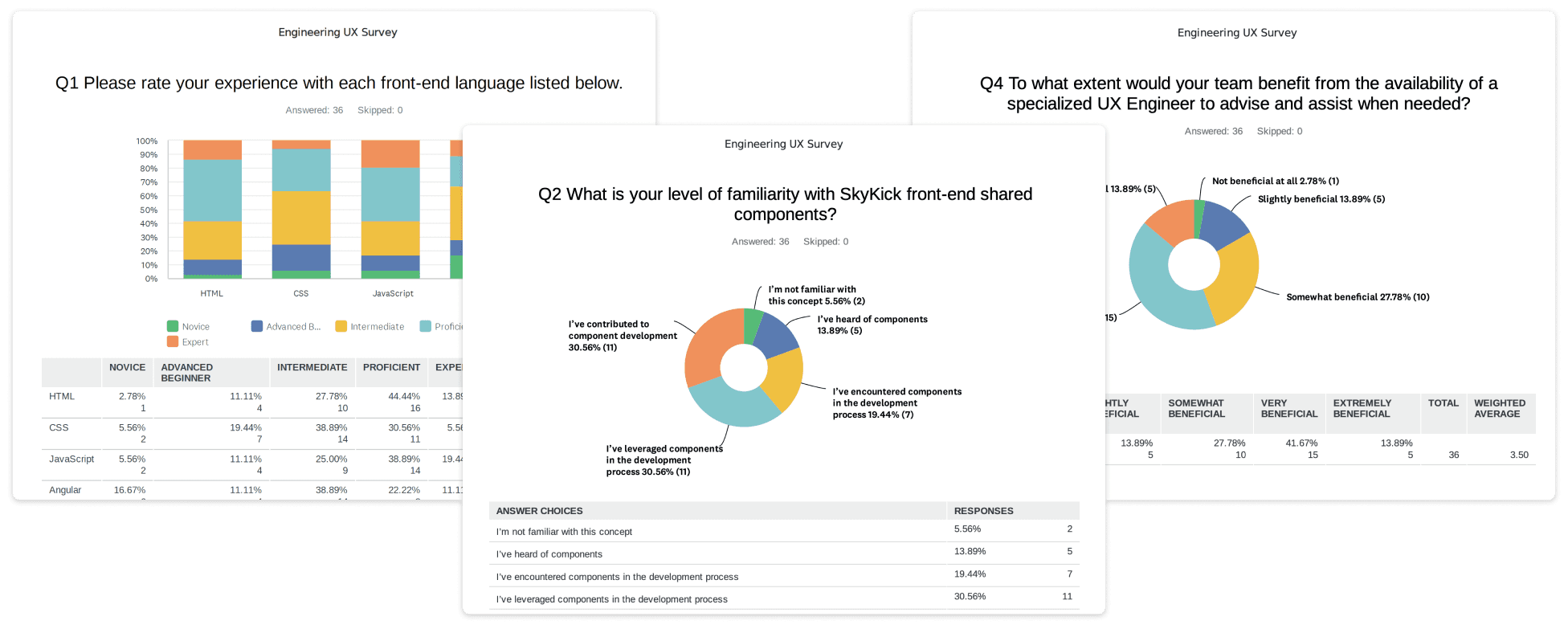
Partnering with our UX Researcher, I launched the company's first Engineering UX Survey: 36 respondents from a 70-person engineering org, 80% of them with practical knowledge of the components, 61% actively developing with the system. Those results gave Design the leverage to define and hire SkyKick's first dedicated UX Engineer.