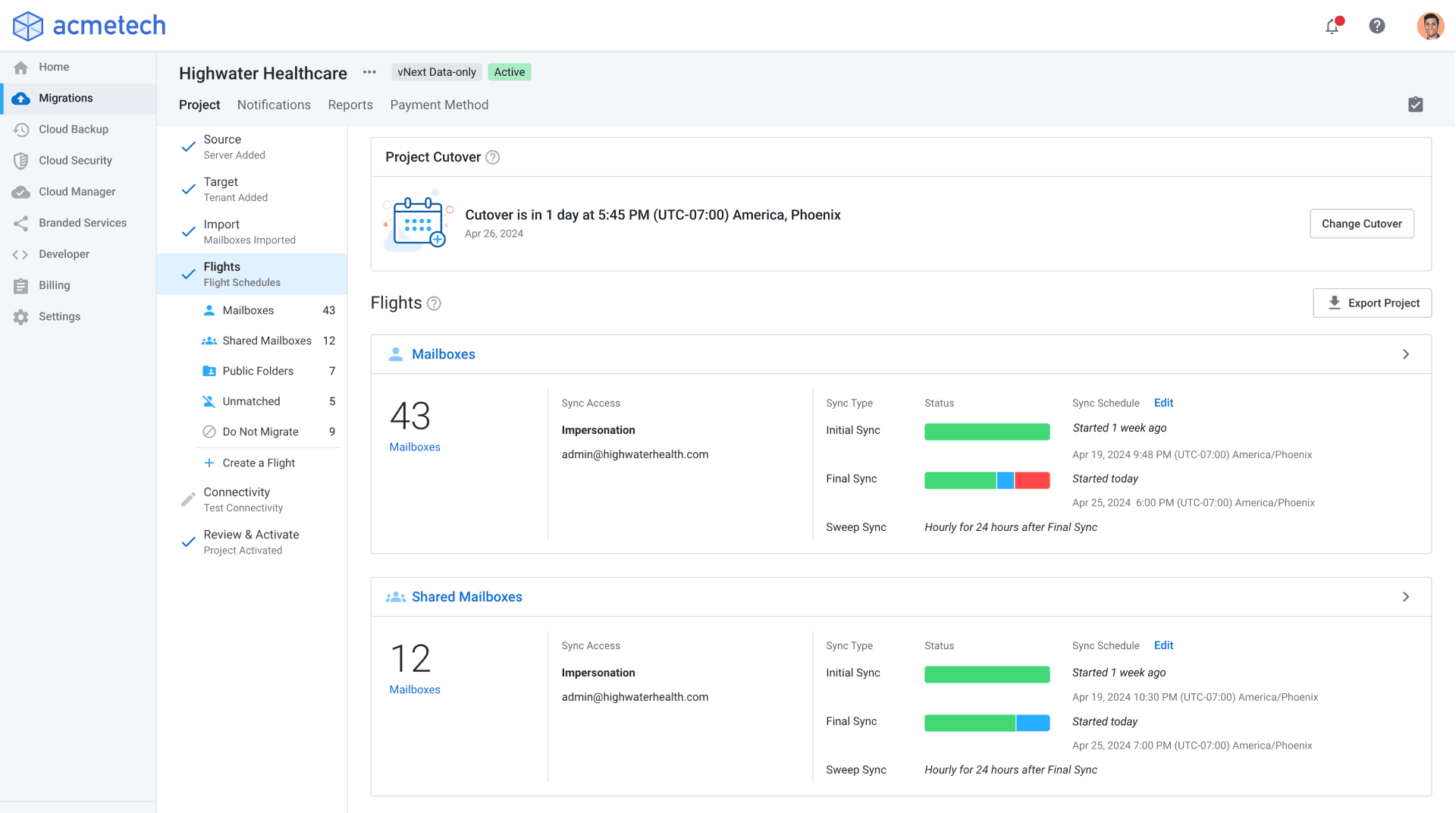
Context
Moving email is a sensitive operation

Problem
A rigid flow, driving escalation
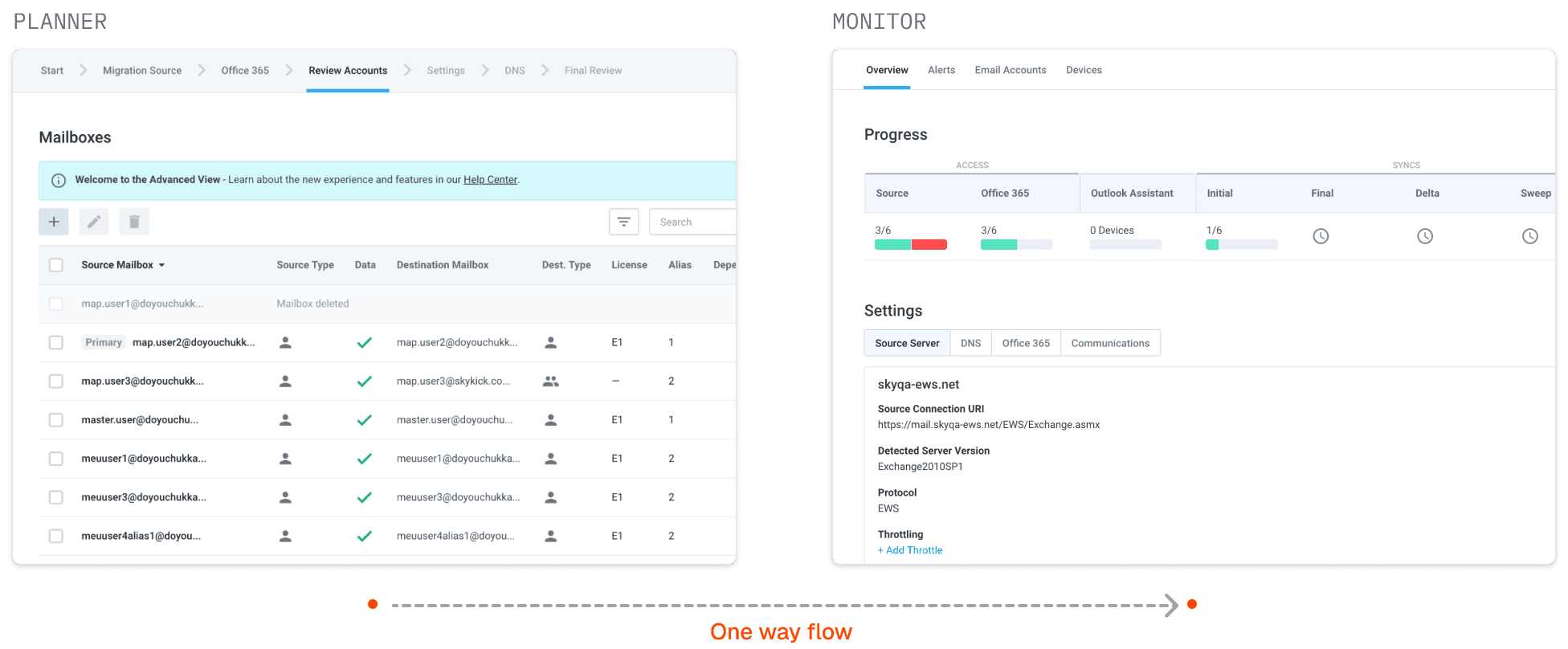
Approach
Reframing migration as orchestration
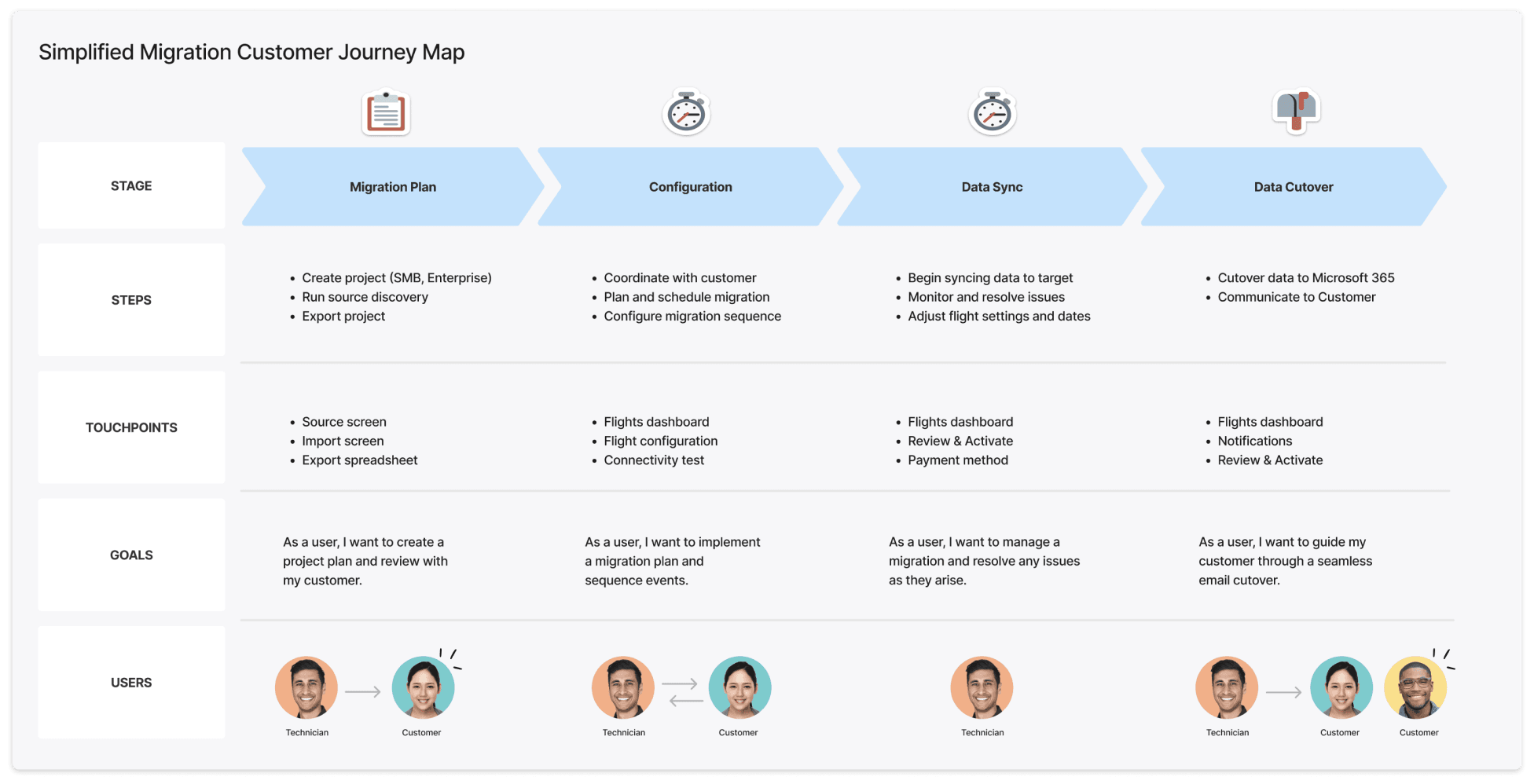
Solution
Unified, flexible flow
We collapsed two disconnected tools into one. Partners could watch a migration run and change it without starting over.
Draft until it goes live
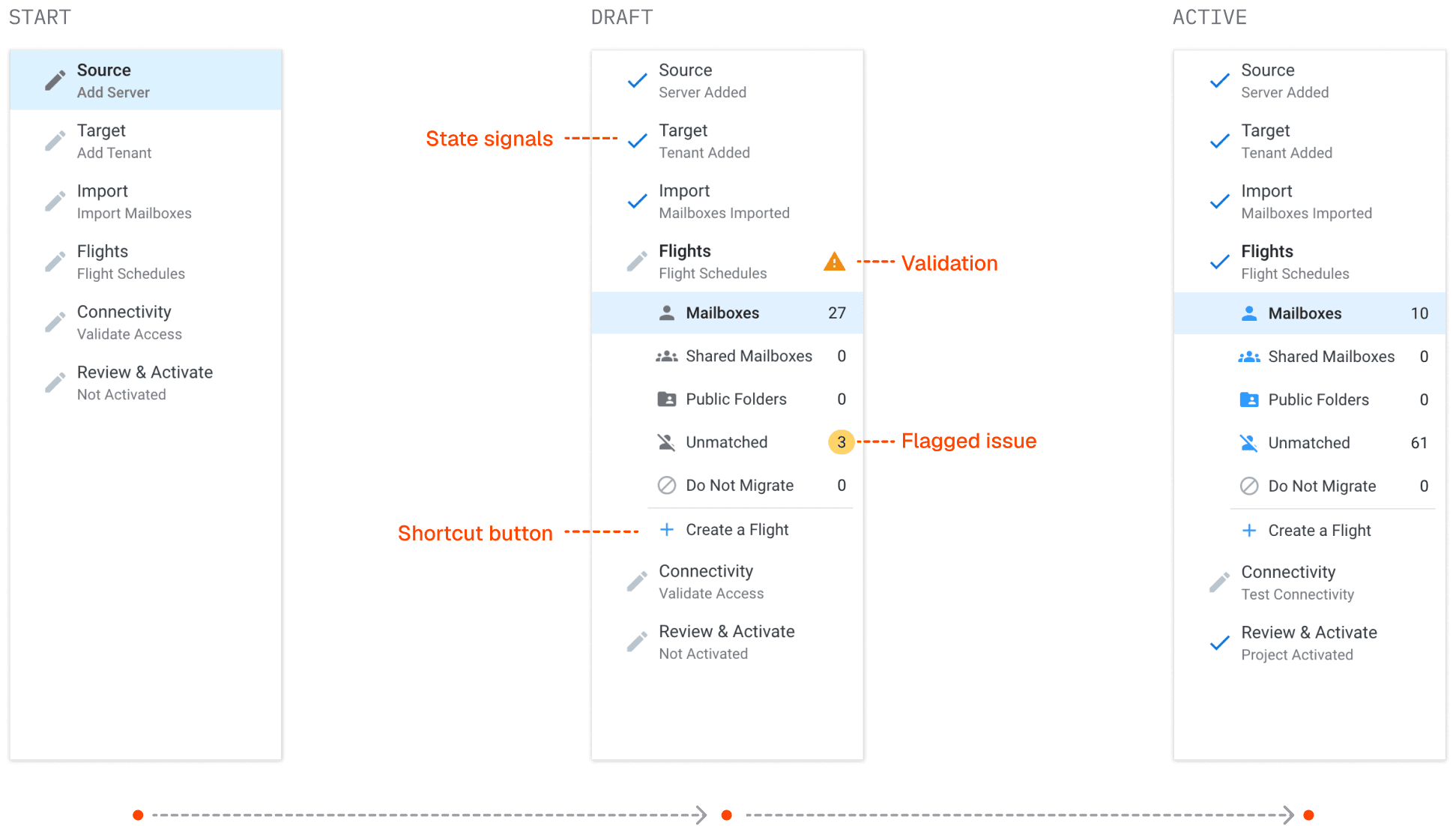
I applied draft and active states to the migration project, marking the moment data starts syncing across systems. Nothing moves until a partner activates, so they can start with the essential inputs, gather discovery data, and refine configuration as they go.
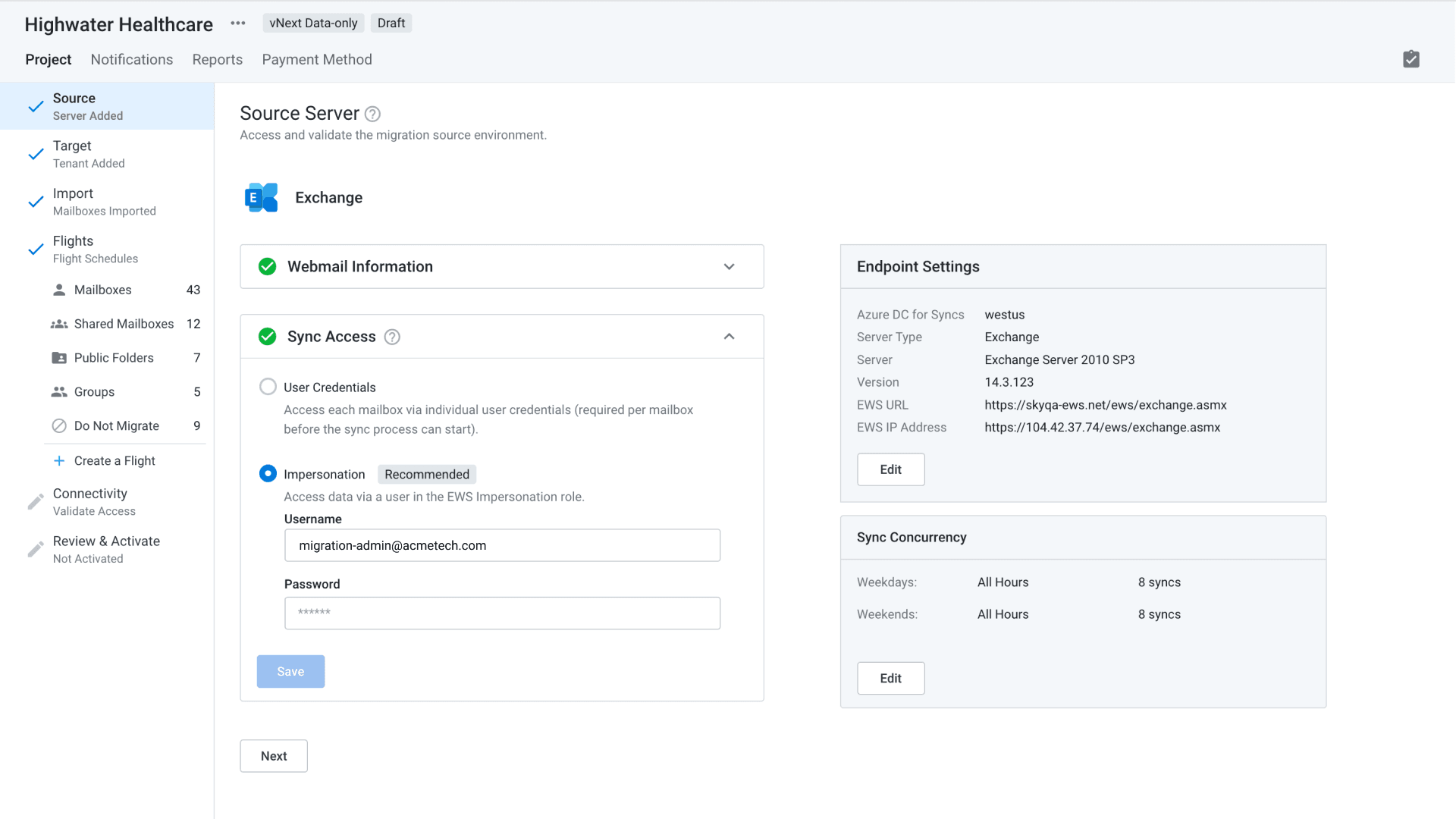
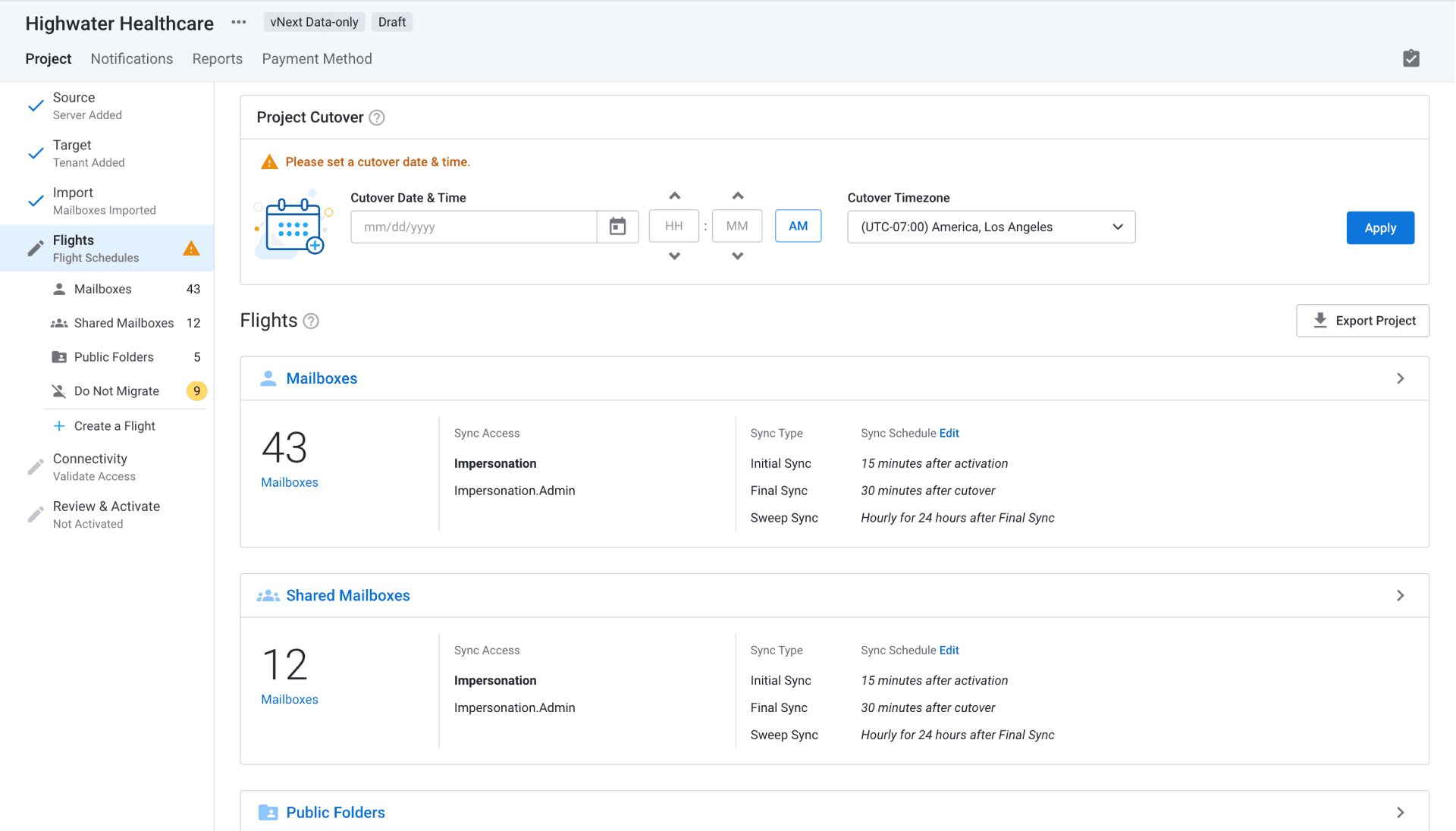
Migration Flights
Partners could group mailboxes into prioritized batches and stage a rollout, executives first, broader teams later. I named the feature Flights. It tested well immediately and became a marketing pillar.
Non-linear navigation
I designed the project navigation to carry state, so a partner can see at a glance what is complete and what needs attention. Progressive disclosure kept the early steps simple, and shortcuts let partners jump straight to a flagged issue instead of calling support.
Live plan reconfiguration
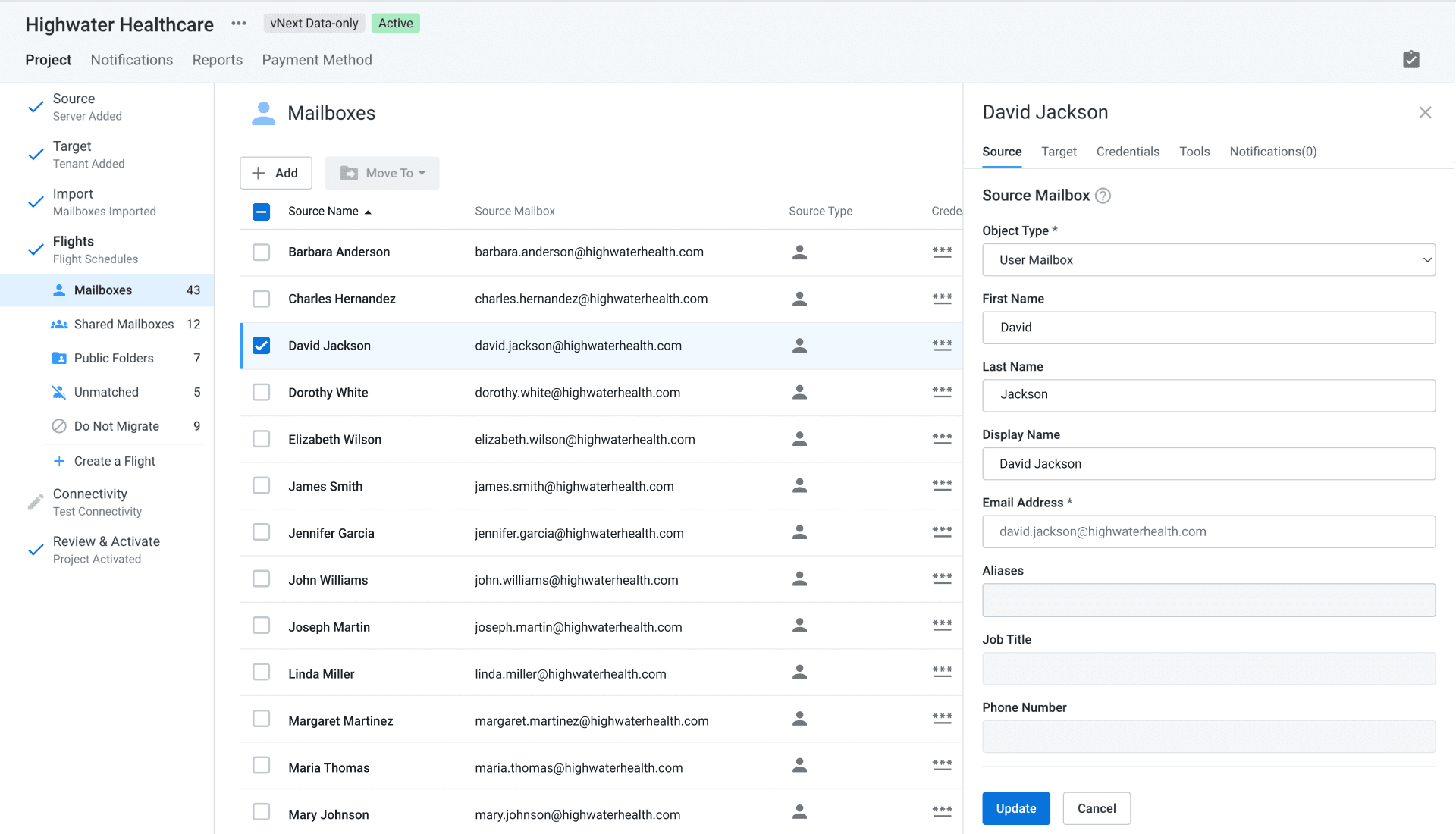
I made mailbox settings editable after a migration went live. The no-going-back constraint was gone, and with it the support dependency it had created.
Outcomes
Less friction, more migrations
Partners finally got features they'd been asking for. For SkyKick, the redesign extended the life of its flagship product and unblocked scale with partners like GoDaddy.
“Flights, the customization, is most valuable to us. That’s going to be absolutely monumental in the control that we have on all migrations moving forward.”
With more time
I’d have pushed for shared event instrumentation, Design and Product working from the same behavioral data. The flexible navigation gave partners many paths through the product, and we couldn’t see which ones they took or where they dropped off. That visibility would have been the foundation for data-driven iteration.