Problem
Iterate fast without debt
Approach
Spreadsheet to prototype
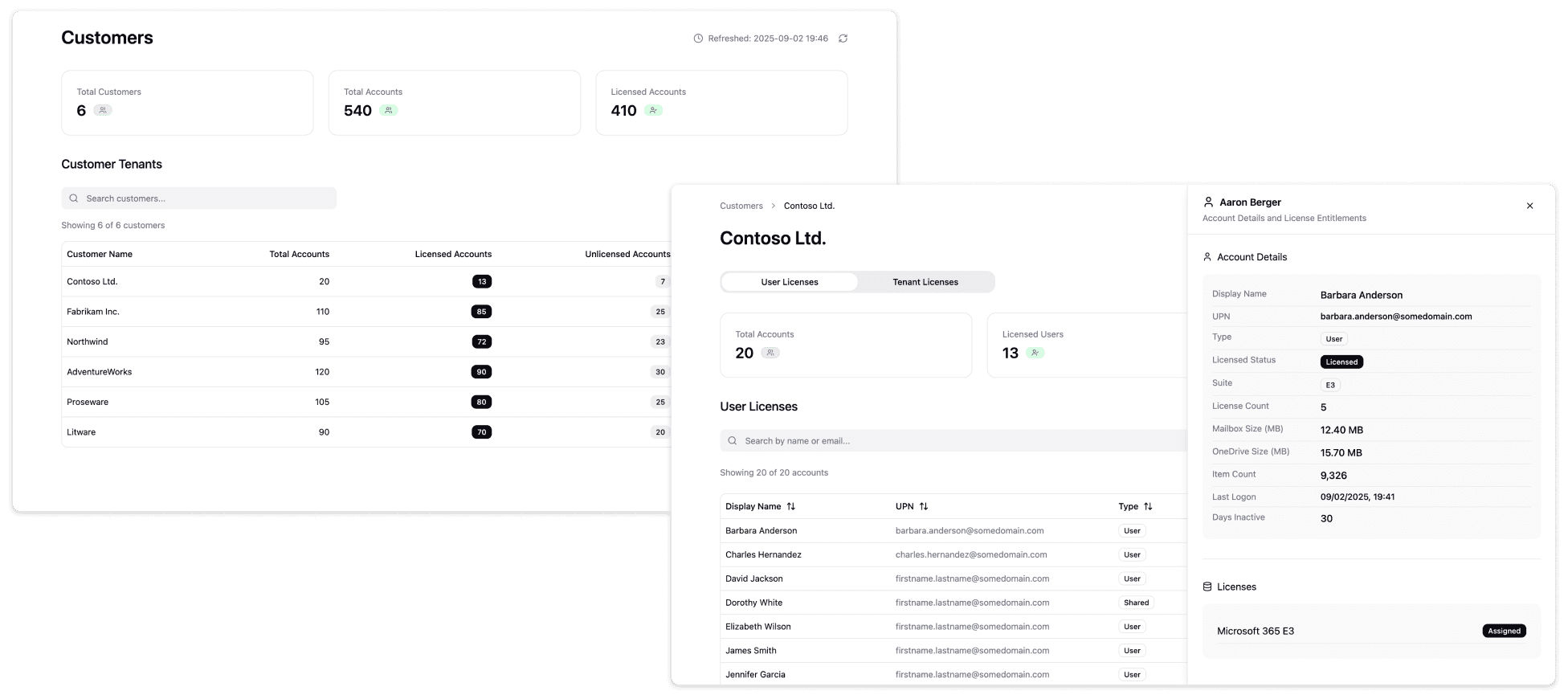
Selected Work
Foundations first
I built the foundations first: a component library and a lightweight brand. Everything after was faster to make, which meant more rounds of feedback and something credible to put in front of investors while the product was still moving.
Design System
I built a token-based React component library covering colors, typography, and UI patterns. I generated components in v0 and iterated in Claude Code, then pushed the library to the engineering repo so the team could adopt it directly.
Brand System
I designed a lightweight brand package to give the startup credibility from day one, structured enough to hold up across product screens and investor decks.
Onboarding Flow
I designed the first-run flow around bulk sync: a provider connects Partner Center and every tenant lands in one pass, with a manual path for the ones outside it.
Marketing Site
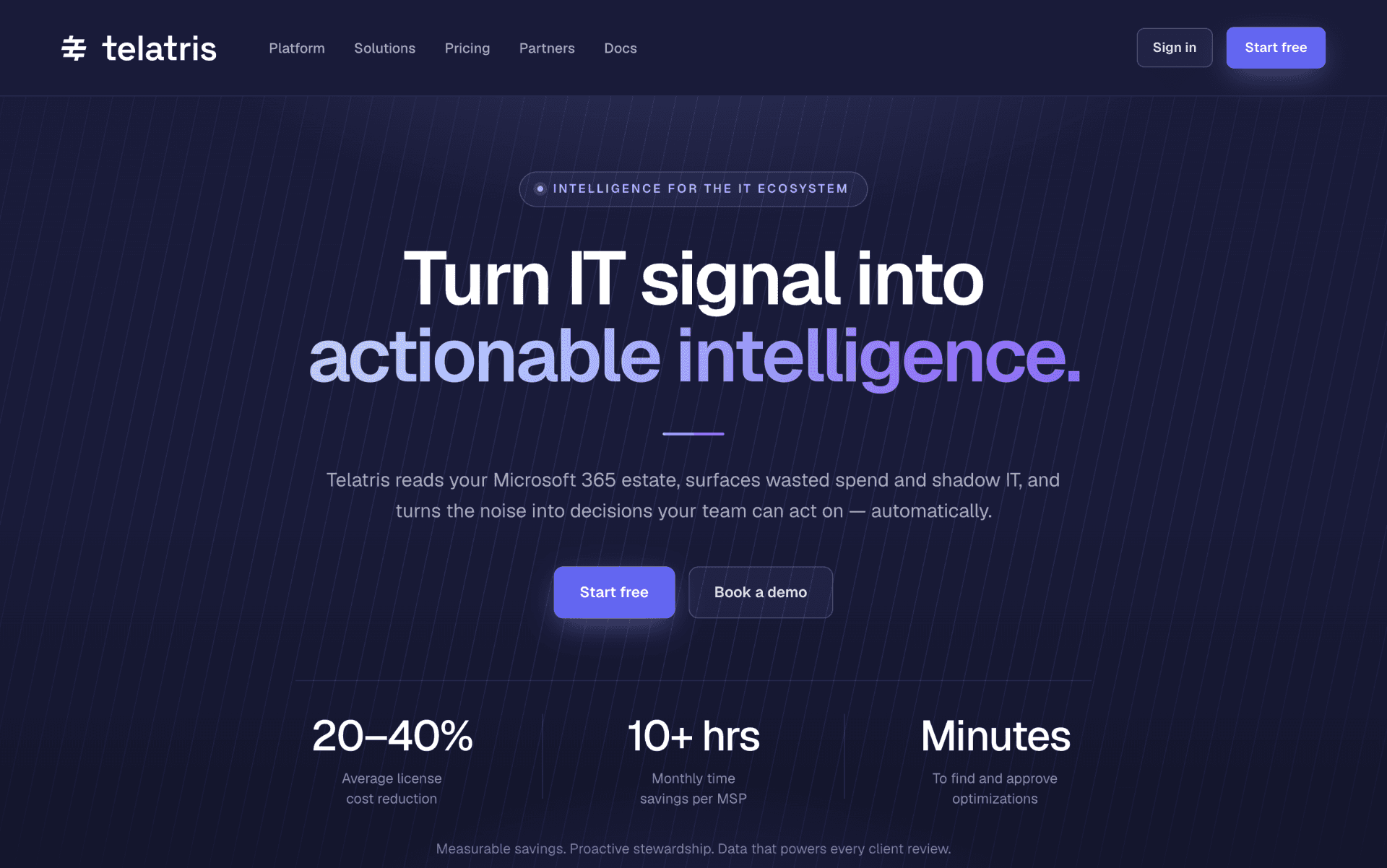
I designed and shipped the marketing site, working directly with the CEO on positioning and messaging built around provider outcomes.
Outcomes
Ramp to release
In six months I handed over a coded front end: real components from the design system, ready for the backend to connect to. Tables, alerts, toasts, each with usage notes for the engineers picking them up. The brand went with it, giving the founders something to work from in investor conversations. The product is still pre-release, and I rejoined the team in June 2026.
What I learned
AI has changed every phase of my process. Prototyping a product UI is easy now, yet designing a considered UX still requires the fundamentals of connecting the user's pain point with a valid business solution. Most of the build ran in v0 and Claude Code, and I got better results giving the model an outcome and constraints than giving it instructions. I'm still working through a systematic way of leveraging AI tools to stay true to my product design craft.